Tokenised Deposits with the rTRIO Solution.
- id-bound
- Apr 28
- 2 min read
Updated: May 3
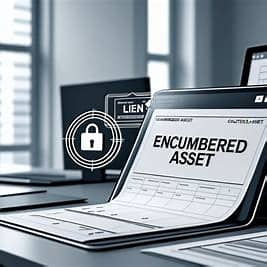
🤑 The "Dead Liquidity" Problem in TradFi.
In traditional finance, billions are "trapped" in settlement queues (T+1/T+2) or escrow accounts. This is known as Dead Liquidity—capital that cannot be used elsewhere but has already been committed to a trade. rTRIO eliminates this issue by transforming static balances into Context-Aware Liquidity.
🚀 Mitigating Intraday Liquidity Risk
For an institutional treasurer, rTRIO provides three specific risk-mitigation vectors:
A. Atomic Delivery-versus-Payment (DvP)
The Risk: "Principal Risk"—sending the rTRIO payment but failing to receive the Tokenized Deposit asset.
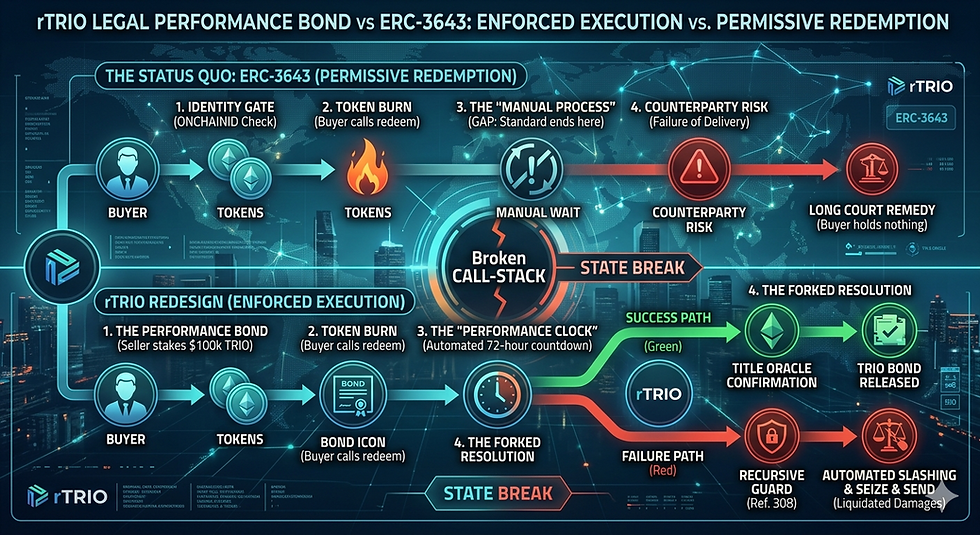
The rTRIO Solution: If the asset isn't deliverable, the rTRIO doesn't leave the wallet.
B. Reduction of "Gridlock."
The Risk: A chain of settlements fails due to a third party delaying a manual KYC check or title clearance.
The rTRIO Solution: Using rTRIO automates the compliance check. The rTRIO "knows" its destination is cleared before the transaction is even broadcast, preventing "failed trades" from clogging the liquidity pipeline.
C. Just-in-Time (JIT) Funding
The Risk: Keeping large amounts of cash in non-interest-bearing escrow accounts.
The rTRIO Solution: Because rTRIO only pulls funds when all conditions are met, the Buyer can keep their rTRIO in a yield-generating vault or a repo-market contract until the exact second of settlement.
👏 Compliance Framework
Institutions cannot hold "bearer" assets that they cannot control in the event of a court order.
Origin Tracing: Every rTRIO token carries its "KYC-Origin" footprint, enabling "cash-like" behavior in the wild while maintaining a complete audit trail for the Institutional Spender.
🚀 Secondary market for retail investors. Huge liquidity booster.
👏 Strategic Conclusion
The rTRIO architecture is the first implementation of Conditional Liquidity that satisfies the "Basle III" requirements for intraday monitoring and the "MiCA/SEC" requirements for programmable compliance. It moves the financial industry from a "Trust, then Verify" model to a "Verify, then Move" model.
🪙 In layman's terms: anyone can legitimately buy, 24/7, the interest-bearing Bank's tokenized deposit (or any other Real-World-Asset) and legitimately trade them, 24/7, with anyone else.

Comments